

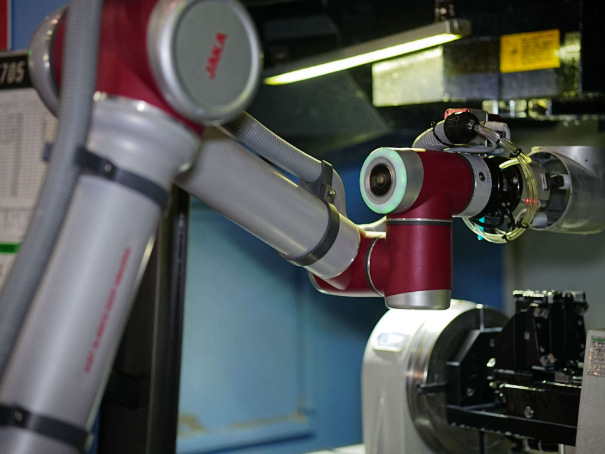
As we move through 2026, the demand for automation is no longer confined to massive automotive assembly lines or heavy industrial plants. A new generation of “micro-automation” is taking over laboratories, electronics workshops, and even high-end retail service counters. The mini robot arm has emerged as the essential tool for these spaces, offering the same 6-axis dexterity as its industrial giants but in a form factor that fits comfortably on a standard desk.
However, choosing a 6 axis desktop robot arm is fundamentally different from selecting a heavy-duty industrial cobot. When space is limited and tasks are delicate, “smaller” must also mean “smarter.” This guide breaks down the critical factors you need to consider to ensure your desktop automation is a success, highlighting why the right choice can transform your operational efficiency.
1. Defining “True” 6-Axis Dexterity
In the world of mini robot arms, you will often see 3-axis or 4-axis models (such as SCARA robots). While these are excellent for simple vertical pick-and-place tasks or high-speed sorting, they lack the “wrist” flexibility required for truly complex work.
A true 6 axis desktop robot arm mimics the human arm, featuring a base, shoulder, elbow, and three wrist joints. This allows it to reach around obstacles and orient tools at any angle in 3D space. This versatility is vital for modern applications:
Circuit Board Assembly: Precisely angling a soldering iron or a glue dispenser to reach tight corners of a PCB.
Laboratory Pipetting: Reaching between different racks, centrifuges, and analyzers that may be positioned at various heights and angles.
Quality Inspection: Presenting a part to a camera or sensor from every possible 3D orientation to catch microscopic defects.
2. Payload vs. Precision: The Balancing Act
The most common mistake when buying a mini arm is focusing solely on how much it can lift. In desktop and laboratory applications, repeatability is often far more important than raw strength.
Payload Management: Most desktop models handle between 0.5 kg and 2 kg. It is a critical rule of thumb to remember that your payload must include the weight of the end-effector (gripper, sensor, or tool). If your gripper weighs 400g and your sample weighs 700g, a 1 kg-rated arm will operate near its limit, which can reduce its lifespan and precision.
Repeatability is King: For desktop work, look for a rating of at least ±0.1 mm. When you are dealing with micro-electronics or 96-well plates in a lab, a deviation of half a millimeter can result in a failed solder joint or a contaminated sample. Some high-end models even offer repeatability as low as ±0.02 mm for ultra-precise micro-assembly.
3. Integration and the “All-in-One” Design Philosophy
Traditional industrial robots are notorious for requiring a bulky external control cabinet—sometimes larger than the robot itself—connected by a thick “umbilical cord” of cables. For a desktop environment, this is a major drawback.
The best modern 6 axis desktop robot arms are designed with an “All-in-One” philosophy. This means the controller, drive modules, and communication interfaces are integrated into the base or the joints of the arm itself. This design provides several benefits:
Footprint Efficiency: The robot takes up no more space than a laptop or a coffee machine.
Portability: The entire system can be unplugged and moved to a new station by a single person.
Simplified Power: Many of these units can run on standard 24V DC power or a simple wall outlet, eliminating the need for specialized industrial electrical work.
4. Ease of Use: Empowering the Non-Technical Operator
The real power of a mini robot arm in 2026 lies in its accessibility. You shouldn’t need a PhD in robotics to program a simple pick-and-place routine. When evaluating a desktop model, look for three specific ease-of-use features:
Graphical Programming: A “drag-and-drop” interface (often based on Blockly) that allows you to build logic visually on a tablet or PC.
Free-Drive/Drag-Teaching: The ability to physically move the arm to the desired points. The robot “remembers” these coordinates, making path planning intuitive and fast.
Wireless Control: Modern systems allow you to teach and monitor the robot via Wi-Fi from a smartphone or tablet, removing the need for a wired teach pendant.
5. The Top Choice for 2026: JAKA MiniCobo
When evaluating these criteria, the JAKA MiniCobo stands out as the definitive professional-grade mini robot arm. Designed to be “Smart, Simple, and Small,” it bridges the gap between hobbyist toys and cost-prohibitive industrial systems.
Why the JAKA MiniCobo is the Industry Benchmark:
The JAKA MiniCobo is engineered specifically for the service, education, and light-manufacturing sectors where space and ease of deployment are the top priorities. It packs the punch of an industrial cobot into a sleek, desktop-friendly frame.
Ultra-Lightweight and Flexible: Weighing only 9.4 kg, the MiniCobo is incredibly easy to deploy. Its compact base allows it to be mounted at any angle—on a wall to save bench space, or even upside down on a ceiling track.
Professional Performance: Despite its diminutive size, it offers a 1 kg payload and a generous 580 mm working radius. Its repeatability of ±0.1 mm makes it a favorite for lab automation and precision testing
Integrated Intelligence: It features an “all-in-one” intelligent drive module that eliminates the need for an external control box. This creates a clean, streamlined desktop setup that fits perfectly into modern research and service environments.
Safe Collaboration: As a true collaborative robot, it includes six levels of adjustable collision detection. It can work safely alongside students or laboratory technicians without the need for safety cages or light curtains.
6. Environmental and Operational Considerations
Before finalizing your purchase, consider the environment where the 6 axis desktop robot arm will live.
Noise Levels: In a quiet laboratory or an office, you don’t want a robot that whines or hums loudly. The JAKA MiniCobo is designed for low-noise operation, ensuring it doesn’t disrupt the work of nearby personnel.
Connectivity: Does the robot support the communication protocols you need? If you plan to link it to a 2D/3D vision system like the JAKA Lens, ensure the controller has the necessary ports and software support to handle real-time data.
Maintenance: Look for a model with high-quality components that require minimal maintenance. High-end mini arms are built to last for thousands of hours without needing a joint overhaul.
Conclusion: Small Form, Massive Potential
The decision to invest in a mini robot arm is an investment in the future flexibility of your workspace. Whether you are automating a diagnostic assay, a micro-electronics assembly line, or a boutique retail experience, the right 6-axis model serves as a tireless, high-precision partner.
The JAKA MiniCobo represents the cutting edge of this desktop revolution. By combining industrial-grade precision with an incredibly user-friendly, lightweight design, it allows teams to automate complex tasks without the traditional barriers of high cost and difficult programming. In the competitive landscape of 2026, the MiniCobo is the tool that turns a standard desk into a high-throughput production center.

