

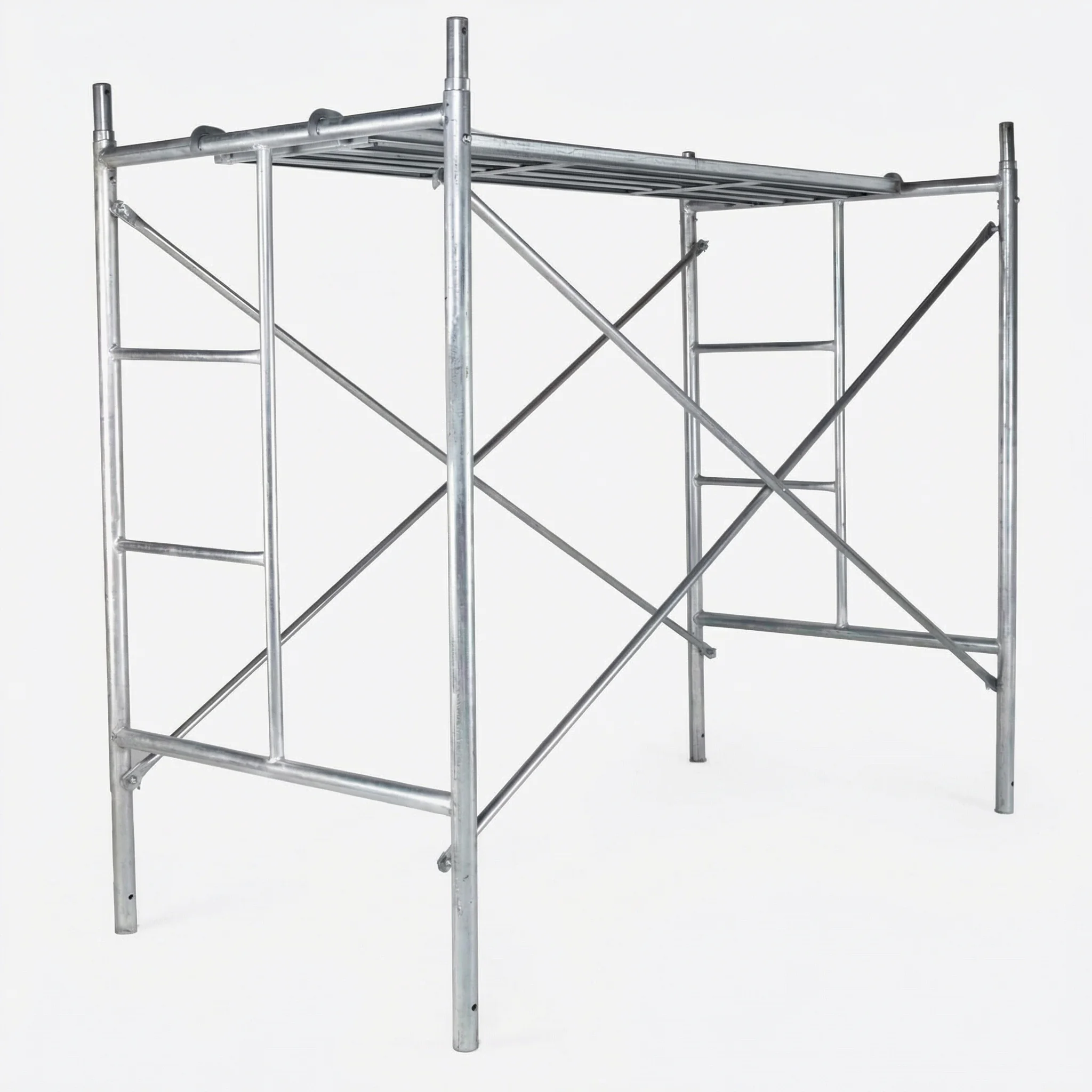
Choosing between H-frame and ringlock scaffolding depends on building geometry, access requirements, assembly conditions, and project duration. H-frame systems are generally suitable for repetitive facade work with straightforward layouts. Ringlock systems offer greater flexibility when working around irregular structures, changing elevations, or complex access points.
Both systems provide temporary working platforms, but their components and assembly methods differ. Contractors should compare site conditions, labor requirements, material quantities, and engineering specifications before selecting a system. The right choice can reduce unnecessary adjustments and support more predictable construction schedules.
How the Two Scaffolding Systems Differ
Traditional frame scaffolding uses prefabricated vertical frames connected by braces and supporting platform components. Its modular arrangement allows crews to assemble repeated bays with relatively few connection steps. This makes it practical for projects where the working area follows a regular pattern.
Ringlock scaffolding uses vertical standards with welded rosettes. Horizontal ledgers and diagonal braces connect to these rosettes through compatible locking components. Multiple connection directions allow crews to create different bay arrangements without relying on fixed rectangular frames.
The main difference is configuration flexibility. H-frame systems favor repeated dimensions and straightforward assembly. Ringlock systems provide more options for adjusting platform positions and structural layouts. Neither system should be selected without checking the required loads and site-specific design.
When H-Frame Scaffolding Is a Practical Choice
For residential buildings, exterior painting, plastering, and routine facade maintenance, h frame scaffolding can provide an efficient access arrangement. Its prefabricated frames help workers establish consistent working levels along relatively straight building elevations.
Installation is usually straightforward when ground conditions, bay spacing, and access requirements remain consistent. Crews can repeat the same assembly sequence across several sections, helping improve installation efficiency on projects with repetitive layouts.
The modular design also supports organized dismantling and material handling. However, frame dimensions can limit adjustments around projections, curved walls, or narrow spaces. Contractors should verify whether compatible components can accommodate these conditions before ordering equipment.
When Ringlock Scaffolding Offers More Flexibility
Industrial facilities, infrastructure projects, and buildings with irregular elevations often require adaptable scaffold arrangements. Ringlock systems can accommodate different bay lengths, changes in direction, and multiple working levels through compatible components and approved configurations.
For example, maintenance work around tanks, pipe networks, or complicated structural connections may require platforms at different heights. Ringlock standards and ledgers allow engineers to develop arrangements around these obstacles while maintaining defined connection points.
This flexibility comes with additional planning requirements. Crews must identify suitable components, follow the approved assembly sequence, and verify brace positions. More connection options do not remove the need for structural calculations or competent installation supervision.
Comparing Installation Time and Labor Requirements
Assembly speed depends on the scaffold design rather than the connection method alone. Regular facade projects often favor prefabricated frames because workers can install repeated sections using a familiar sequence.
Ringlock assembly involves positioning standards, connecting ledgers, and installing diagonal braces according to the scaffold design. Complex arrangements may require additional measurements, but modular components can reduce the need for improvised solutions around obstacles.
Labor estimates should include unloading, sorting, assembly, inspection, modification, and dismantling. Contractors should also consider crew experience. Workers familiar with one system may require additional training before using another connection method.
Load Capacity and Safety Considerations
Neither system has a universal load capacity. Safe working loads depend on component specifications, bay dimensions, platform arrangements, bracing, foundation support, and the complete scaffold configuration.
Contractors should identify whether platforms will support workers, tools, stored materials, or heavier construction activities. These requirements determine suitable scaffold classes, allowable loading, and the need for additional structural support.
Both systems require suitable access arrangements, stable foundations, and regular inspections under applicable regulations. Guardrails and toe boards should be provided where required by the applicable standards and site-specific safety plan. Manufacturer instructions and approved engineering drawings should guide installation. Mixing components from different systems requires documented compatibility verification.
Material Purchasing and Project Costs
Initial equipment prices provide only part of the purchasing picture. Buyers should calculate the number of frames or standards, braces, platforms, base jacks, access components, and connection accessories required for the complete project.
For repetitive construction work, frame scaffolding may offer lower assembly labor requirements. Ringlock equipment may justify additional component planning when contractors regularly handle projects with changing layouts.
Suppliers such as Rongze provide scaffolding and construction support materials for project procurement. They can be considered when buyers need to coordinate component specifications and purchasing requirements across different construction applications.
Before confirming an order, purchasing teams should request dimensional drawings, material specifications, applicable test documentation, and packing details. Replacement component availability and compatibility with existing inventory also influence long-term equipment costs.
Choosing a System Based on Site Conditions
The choice between h frame scaffolding and ringlock should begin with a review of building drawings. Straight facades, repeated platform heights, and predictable access routes generally favor H-frame arrangements. Irregular structures and frequent changes in working positions often favor ringlock.
Project managers should also consider transport space, storage conditions, installation experience, and expected reuse. Comparing complete scaffold layouts gives a clearer cost estimate than comparing individual component prices.
For contractors reviewing equipment suppliers, Rongze offers construction scaffolding and related support materials. Its product range provides a procurement option, while final system selection should remain based on verified specifications and project requirements.

