

Surgical robots and modern healthcare equipment rely on precise, responsive motion components to perform delicate movements. As minimally invasive surgery, rehabilitation devices, and robotic assistance systems develop, medical device engineers increasingly consider compact actuation systems that deliver controlled torque within limited installation spaces.
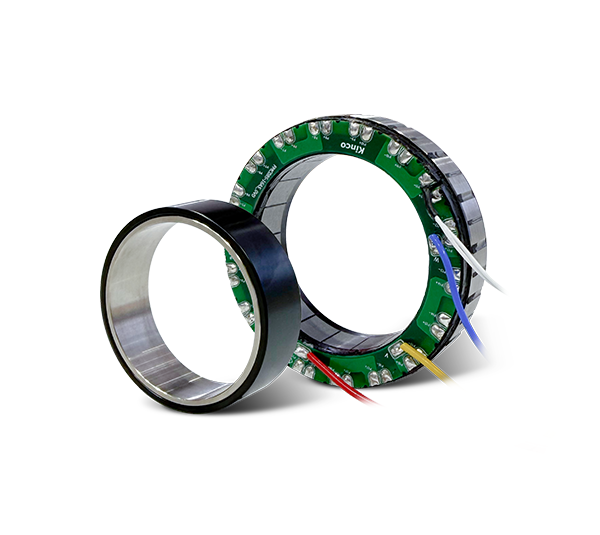
Frameless torque motors consist of stator and rotor assemblies that can be integrated directly into a machine’s mechanical structure. Their compact configuration offers greater flexibility in joint design, while hollow-bore structures can provide space for internal cable routing.
Enhancing Surgical Arm Dexterity and Joint Integration
Surgical robotic arms require multi-axis movement with smooth articulation to execute complex minimally invasive procedures. Integrating a compact frameless torque motor directly into the joints of a surgical manipulator enables machine designers to eliminate external gearboxes, couplings, and bulky mechanical housings.
- High torque density per unit volume supports low-profile robotic joint designs.
- Direct-drive mechanics minimize rotational backlash, improving end-effector positioning accuracy.
- Large hollow-shaft designs allow internal routing of optical fibers, power wires, and fluid lines.
Reducing the number of intermediate mechanical components can simplify joint structures and limit potential sources of mechanical backlash. A large hollow bore also provides additional space for signal cables and other internal connections, helping designers organize wiring within rotating assemblies.
Motor cogging, torque fluctuations, and mechanical vibration are important considerations in precision robotic applications. Controlling these factors helps maintain smooth joint movement and consistent end-effector positioning during delicate operations such as stitching and tissue manipulation.
Optimizing Rehabilitation Robotics and Patient-Exoskeleton Systems
Physical therapy devices and powered exoskeletons assist patients recovering from neurological conditions or musculoskeletal injuries. Actuators embedded in knee, hip, and elbow joint modules must deliver sufficient torque assistance while remaining unobtrusive and lightweight for ambulatory comfort.
- The FMK series has a rated voltage of 48 VDC, which should be matched to the equipment’s power supply architecture.
- Larger hollow bores provide additional space for cable routing within compact joint structures.
- Motor weight and torque density are important factors when designing wearable actuators.
Integrating a suitable frameless servo motor into powered orthotic joints can provide a compact source of rotational torque. The motor, drive, sensors, and control algorithms must work together to deliver assistance according to the user’s movement requirements.
Thermal management remains vital in wearable medical platforms operating close to human body tissue. Distributed stator windings dissipate heat effectively through the host mechanical structure, maintaining comfortable surface contact temperatures for patients and clinical staff during prolonged physical therapy sessions.
Supporting Precision Positioning in Diagnostic and Imaging Platforms
Diagnostic imaging platforms, automated biopsy systems, and patient positioning tables require smooth, repeatable movements during scanning cycles. High-resolution imaging technologies demand quiet rotational performance and steady angular velocity to prevent artifacts in generated diagnostic imagery.
- Noise and vibration control supports smoother mechanical operation.
- Compact stator and rotor geometries fit into constrained gantry mechanisms.
- Motor thermal characteristics should be considered when designing enclosed equipment assemblies.
Frameless torque motors can be integrated into compact positioning mechanisms where installation space and rotational performance are important. The FMK series features a large hollow bore, high continuous torque density, and a design focused on controlling noise and vibration. These characteristics can be considered when developing robotic joints and other integrated motion assemblies.
Combining stator and rotor assemblies with appropriate feedback devices and controllers allows engineers to configure movement according to the requirements of specific equipment. For imaging platforms, stable rotational speed and controlled mechanical vibration remain important design considerations. The complete mechanical structure and motion control system must be evaluated together to achieve the required positioning consistency.
Quiet Operation and Dynamic Control in Medical Pumps and Fluid Handling
Automated fluid dispensing networks, blood processing centrifuges, and surgical irrigation systems rely on steady motor power to maintain exact flow rates. Variable flow demands require drive motors that maintain constant torque across both low and high speed operating windows.
- Smooth speed regulation prevents pressure surges in sensitive liquid delivery lines.
- Brushless permanent magnet designs prevent carbon dust contamination in sterile rooms.
- Compact frameless designs streamline the assembly of portable infusion carts.
Compact direct-drive motor sets enable fluid equipment manufacturers to build small-footprint pumping systems suitable for crowded operating suites. Eliminating mechanical brushes prevents particle generation, assisting clinical teams in maintaining cleanroom standards and reducing maintenance interventions.
Real-time feedback monitoring enables drive controllers to adjust motor current dynamically according to fluid viscosity shifts. Proactive torque adjustment helps prevent pump blockages, protecting fluid integrity during sensitive blood handling or continuous medication administration.
Building Next-Generation Healthcare Systems with Frameless Motion Technology
Selecting direct-drive motor components offers medical device engineers a flexible path for developing compact, highly maneuverable healthcare robotics. As clinical settings favor smaller, more agile equipment, frameless motor technology continues to replace traditional housed motor assemblies.
Evaluating continuous torque needs, operating voltage limits, thermal dissipation paths, and hollow bore diameters ensures optimal hardware selection for specialized medical tasks. Aligning mechanical interfaces directly with motor windings supports high power output within slim physical profiles.
Kinco‘s FMK series frameless torque motors are compatible with RD series hollow-shaft drives. Optional configurations, including Hall sensors and temperature sensors, also allow engineers to consider specific feedback and monitoring requirements during motor selection. These motion solutions empower equipment builders to create responsive, reliable medical robotics that improve patient outcomes and streamline modern healthcare workflows.

