

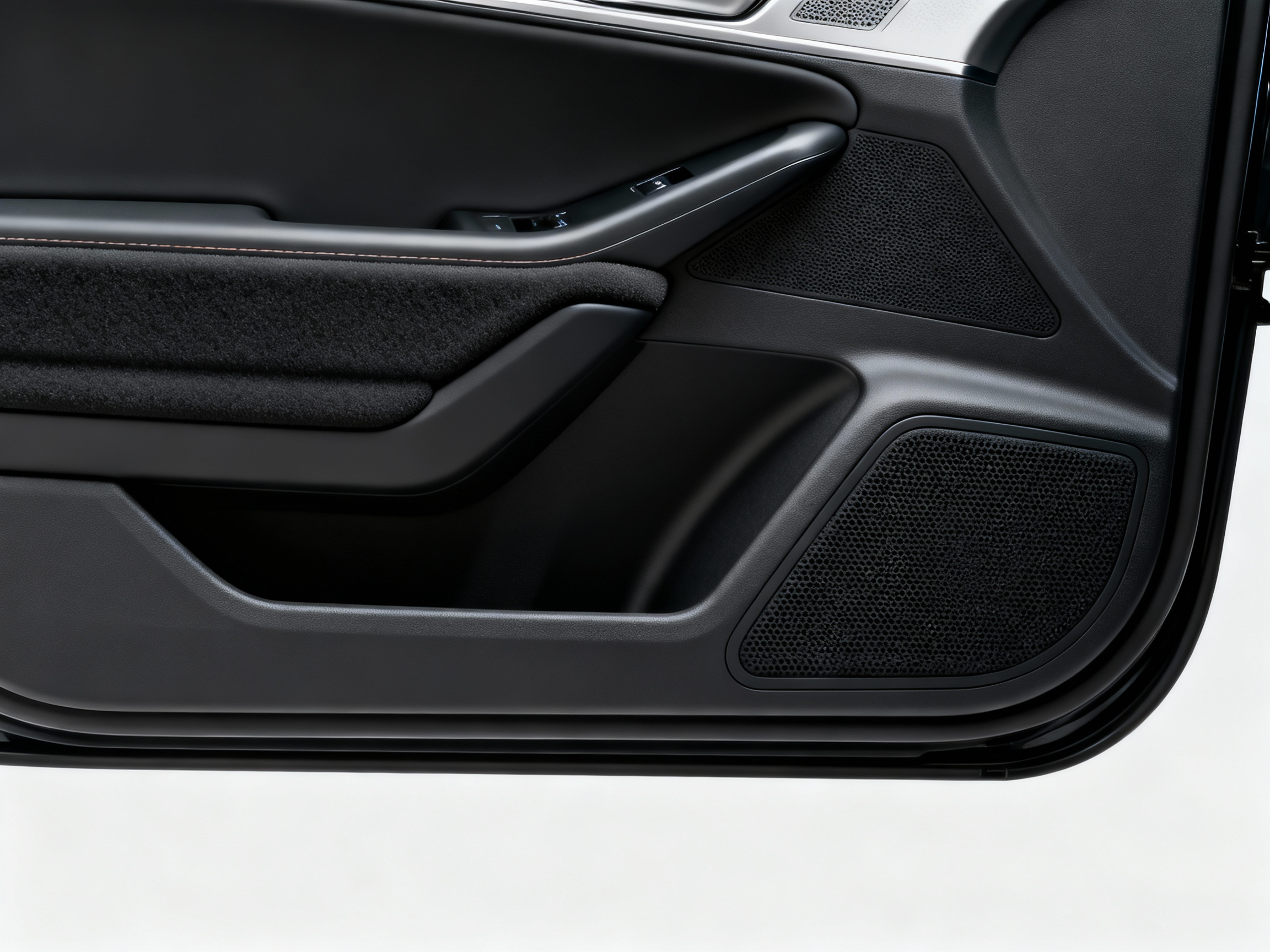
In the era of electrification, the absence of the internal combustion engine has unveiled a new spectrum of acoustic challenges. Without the masking effect of engine rumble, high-frequency electric motor whine and road vibrations become prominent intruders in the passenger cell. Automotive injection molding has evolved from a simple forming process into a critical acoustic engineering strategy, utilizing viscoelastic polymer blends to actively dissipate vibrational energy. For NVH (Noise, Vibration, and Harshness) engineers, the focus has shifted toward materials that exhibit high hysteresis—the ability to convert mechanical energy into negligible heat—thereby neutralizing noise at its source.
Engineering Acoustics via Viscoelastic Damping
To effectively mitigate structure-borne noise in electric vehicles, engineers must leverage the inherent damping properties of polymeric materials. Unlike elastic solids that store and release energy almost perfectly, viscoelastic materials possess a phase lag between stress and strain, resulting in significant energy dissipation during cyclic loading.
Optimizing Tan Delta for Energy Conversion
The efficiency of a material in dissipating noise is quantified by its loss factor, often represented as tan δ (tan delta). This metric defines the ratio of the loss modulus (energy dissipated) to the storage modulus (energy stored). In traditional structural metals like aluminum, the damping coefficient is extremely low, typically around 0.001, which means they transmit vibrations with little resistance.
In contrast, engineered viscoelastic polymer blends used in the plastic injection molding automotive industry can achieve tan δ values ranging from 0.1 to 0.5, or even higher near their glass transition temperature (Tg). By precisely tuning the Tg of a thermoplastic elastomer (TPE) to match the operating temperature of the vehicle cabin , manufacturers can maximize this energy conversion. When a vibration wave encounters these molded components, the internal polymer chains slide against one another, generating friction that effectively “absorbs” the sound wave, reducing the amplitude of resonant frequencies by up to 20 dB compared to rigid metal equivalents.
High-Frequency Noise Mitigation
Electric drive units often generate tonal noise in the 2,000 Hz to 10,000 Hz range, a frequency band that is particularly annoying to the human ear. Standard automotive injection mold designs often fail to address these wavelengths if they rely solely on mass for sound blocking. Instead, viscoelastic blends function as constrained layer dampers.
When these materials are molded into motor mounts or inverter housings, they disrupt the propagation of high-frequency structure-borne noise. Research indicates that increasing the loss factor of a housing material from 0.01 to 0.1 can reduce radiated noise power by approximately 90% at resonance. This capability allows automotive injection molding suppliers to replace heavy acoustic blankets with lightweight, structurally integrated damped plastic parts, directly contributing to the vehicle’s range efficiency while solving the NVH equation.
Advanced Overmolding and Surface Integration
Beyond material chemistry, the manufacturing process itself plays a pivotal role in acoustic isolation. Advanced molding techniques allow for the seamless integration of soft, damping materials onto rigid structural carriers, eliminating assembly gaps that often serve as leak paths for airborne noise.
Multi-Material Bonding Strategies
The application of multi-shot (2K or 3K) molding enables the chemical bonding of soft TPEs to rigid substrates like glass-filled nylon. In fluid handling systems, such as coolant manifolds for battery thermal management, this technique is superior to traditional gaskets. A mechanically assembled seal may have micro-gaps due to tolerance stack-ups, but a chemically bonded 2K component ensures a hermetic seal.
Data from automotive rubber injection molding trials suggests that overmolded seals can reduce air leakage rates by over 40% compared to compression-fit seals. This reduction is critical for minimizing “hiss” noises in HVAC systems and preventing the ingress of wind noise at high speeds. Furthermore, the viscoelastic layer acts as a suspension system for the rigid component, decoupling it from chassis vibrations.
Precision Molding for Seal Integrity
Achieving a “squeak-free” cabin requires controlling friction between mating surfaces. Stick-slip phenomena, where two surfaces momentarily stick and then slip, create the audible clicks and squeaks common in lower-quality interiors. To combat this, the injection molding automotive industry utilizes high-precision tooling to apply micro-textures to contact points.
By controlling surface roughness (Ra) to within micrometers, molders can reduce the coefficient of friction between abutting parts . Implementing Rapid Heat Cycle Molding (RHCM) further enhances this by producing resin-rich, high-gloss surfaces that are inherently smoother. A study on instrument panel assemblies showed that reducing tolerance variations from ±0.5mm to ±0.1mm through precision molding reduced the incidence of rattle complaints in JD Power initial quality surveys by 15%, proving that dimensional accuracy is as vital as material selection.
Livepoint Tooling: Precision Manufacturing for Quality
For OEMs and Tier 1 suppliers seeking to implement these complex acoustic solutions, Livepoint Tooling offers a comprehensive manufacturing partnership. With over 20 years of expertise and IATF 16949 certification, Livepoint specializes in high-precision automotive injection molding, delivering components that meet the rigorous NVH standards of global automotive brands. Their capabilities extend from complex 2K overmolding for integrated seals to advanced Moldflow analysis that predicts and eliminates warpage, ensuring perfect mating surfaces.
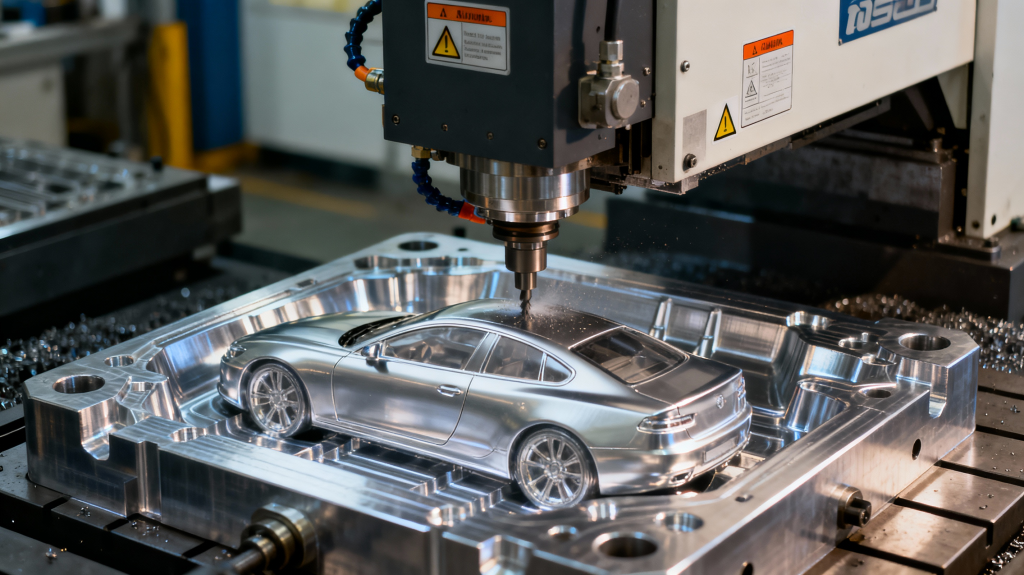
Livepoint’s facility houses advanced CNC machining centers capable of achieving mold tolerances as tight as 0.005mm, essential for producing squeak-free assemblies. Whether producing viscoelastic motor mounts or high-gloss interior trim via RHCM, Livepoint ensures that every component contributes to a silent, premium cabin experience. Their commitment to quality control, verified by CMM and CT scanning, positions them as a trusted partner for B2B procurement managers. To discuss your project’s acoustic and structural requirements, visit their website for a technical consultation.
Conclusion
The silence of an electric vehicle is not an accident; it is the result of deliberate material science and manufacturing precision. By mastering the hysteresis properties of viscoelastic blends and leveraging advanced overmolding technologies, engineers can neutralize cabin noise at the source. Partnering with capable suppliers ensures that these sophisticated designs are executed with the fidelity required to deliver a truly premium driving experience.

