

Selecting the right electrical control products is an important part of planning a commercial power system. One common question is whether a project requires a distribution box, switchgear, or a combination of both. Although these terms are sometimes used interchangeably, they serve different functions within an electrical distribution system.
Understanding the distinction helps engineers, contractors, system integrators, and purchasing teams define equipment specifications more accurately, avoid unnecessary costs, and ensure that the completed system matches the project’s electrical requirements.
What Is a Distribution Box?
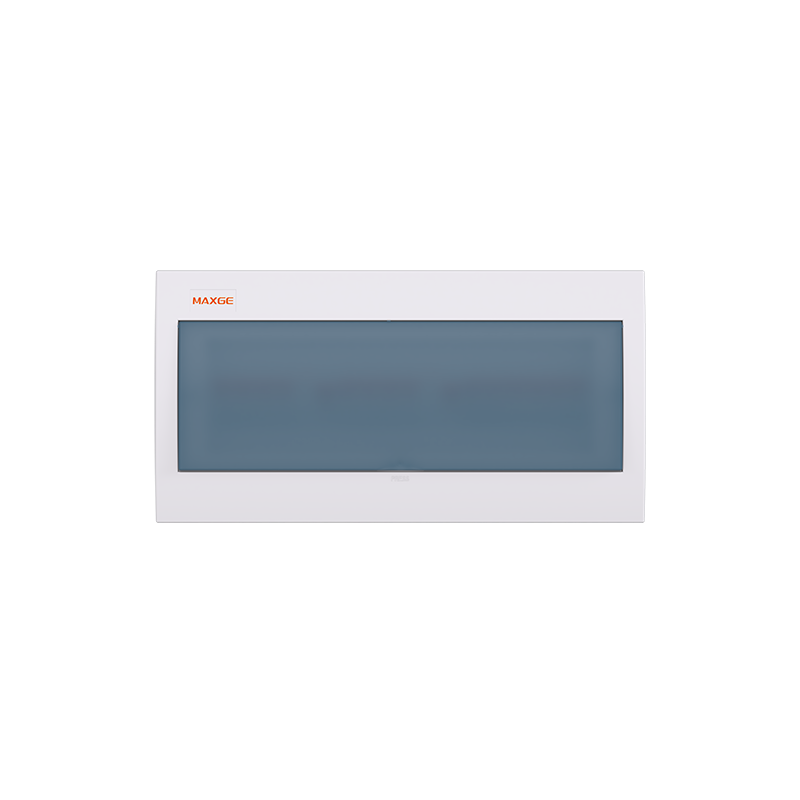
A power distribution box is generally used to receive electrical power and distribute it to multiple downstream circuits. It provides a structured enclosure for circuit protection and connections, helping organize branch circuits while making installation and maintenance more manageable.
The required configuration depends on the application’s voltage, current, number of circuits, installation environment, and protection requirements. For example, a 3-phase power distribution box can be used in commercial facilities and industrial locations where three-phase power needs to be distributed to several loads.
Distribution boxes can also be designed for different installation environments. Metal enclosures may be suitable for applications where stronger mechanical protection is required, while plastic versions can provide a lightweight solution for appropriate indoor installations. The key consideration is not simply the enclosure material but whether the complete assembly meets the electrical and environmental requirements of the project.
What Is Switchgear and How Does It Differ?
Switchgear generally refers to an assembly of electrical switching and protection equipment used to control, isolate, and protect electrical circuits. Depending on the system, it can incorporate devices such as circuit breakers, isolators, busbars, and other control or protection components.
The primary difference is therefore related to scope and function. A distribution box focuses on organized power distribution and branch circuit protection, while switchgear typically covers a broader range of switching, isolation, protection, and system control requirements.
This distinction becomes particularly important when reviewing specifications from electrical switchgear manufacturers or comparing solutions from different suppliers. A product described as a distribution box should not automatically be evaluated against a complete switchgear assembly without first defining the required electrical functions.
How to Define the Scope for a Commercial Project
The first step is to identify where the equipment sits within the power distribution architecture. A typical commercial system may include incoming power equipment, main distribution equipment, sub-distribution equipment, and final circuits. Each stage can have different requirements for rated current, short-circuit protection, isolation, monitoring, and enclosure construction.
For a smaller downstream application, a power distribution box may provide an appropriate solution. For higher-capacity sections of the system where switching and protection functions are more extensive, a switchgear assembly may be more suitable.
Rated current is another important consideration. The equipment should be selected according to the expected load, available fault current, conductor capacity, and applicable electrical standards. Simply choosing an enclosure based on the number of outgoing circuits can result in an incomplete specification.
Installation conditions should also be considered. Indoor and outdoor installations can require different enclosure characteristics, while dusty, humid, or mechanically demanding environments may require additional protection.
Why Component Compatibility Matters
Electrical control products work as part of a system rather than as isolated components. Circuit breakers, isolators, busbars, residual current protection, and other devices must be compatible with the distribution equipment and with one another.
For example, a distribution box may need to accommodate MCBs, RCCBs, MCCBs, or other protective devices depending on the intended application. MAXGE’s product portfolio includes MCB, RCD and RCBO, MCCB, ACB, distribution box, smart breaker, and industrial device categories, allowing equipment selection to be considered across different parts of an electrical system.
The SGDB3 distribution box, for instance, is designed for single-phase and three-phase terminal power distribution. Its configuration supports different protective devices and uses copper busbars and neutral and ground copper strips.
Choosing Between Manufacturers and Solutions
When comparing low voltage switchgear manufacturers, it is useful to look beyond product names and compare the technical scope of each solution. Important factors include applicable standards, rated current, breaking capacity, enclosure protection, installation method, available configurations, certification, and compatibility with other electrical control products.
A supplier with a broader product range can also simplify equipment coordination when a project requires multiple protection and control devices. MAXGE develops products covering low-voltage circuit protection, distribution, industrial control, smart breakers, and new energy applications.
Documentation is equally important. Product catalogs, technical specifications, certifications, installation instructions, and dimensional information can help project teams verify whether a proposed product fits the intended application before procurement.
A Practical Approach to Equipment Selection
Instead of asking whether a distribution box or switchgear is universally better, the more useful question is which equipment matches the specific point in the electrical system.
Start with the system voltage and phase configuration. Then determine the rated current, number of outgoing circuits, required protection functions, fault level, installation environment, enclosure requirements, and applicable standards. Once these parameters are established, the equipment category becomes much easier to define.
For projects requiring a 3-phase power distribution box, for example, the focus should be on phase configuration, current rating, branch circuit arrangement, protective-device compatibility, and installation conditions. For a larger switching and protection assembly, the specification should cover the complete switchgear configuration and its operating requirements.
Building a Clearer Electrical Equipment Specification
The difference between a distribution box and switchgear is ultimately a matter of application, function, and system scope. A well-defined specification helps prevent equipment from being over- or under-selected and makes communication between engineers, contractors, manufacturers, and purchasing teams more efficient. Key considerations may include system voltage, rated current, fault levels, protection requirements, installation conditions, enclosure configuration, and the level of monitoring or control required.
MAXGE develops low-voltage electrical solutions for residential, commercial, industrial, and new energy applications. Its portfolio supports different stages of power distribution and electrical control, including terminal protection, distribution, switching, and intelligent electrical management. These solutions can also be applied to PV, energy storage, and EV charging systems, where equipment specifications may need to account for different circuit characteristics and operating conditions.
For projects where equipment specifications need to be aligned with application requirements and applicable standards, MAXGE’s international certifications and broader low-voltage product capabilities provide a basis for evaluating suitable solutions. If you are reviewing distribution boxes, switchgear-related equipment, or other low-voltage products, you can explore the MAXGE product range and contact MAXGE for product and application information.

