

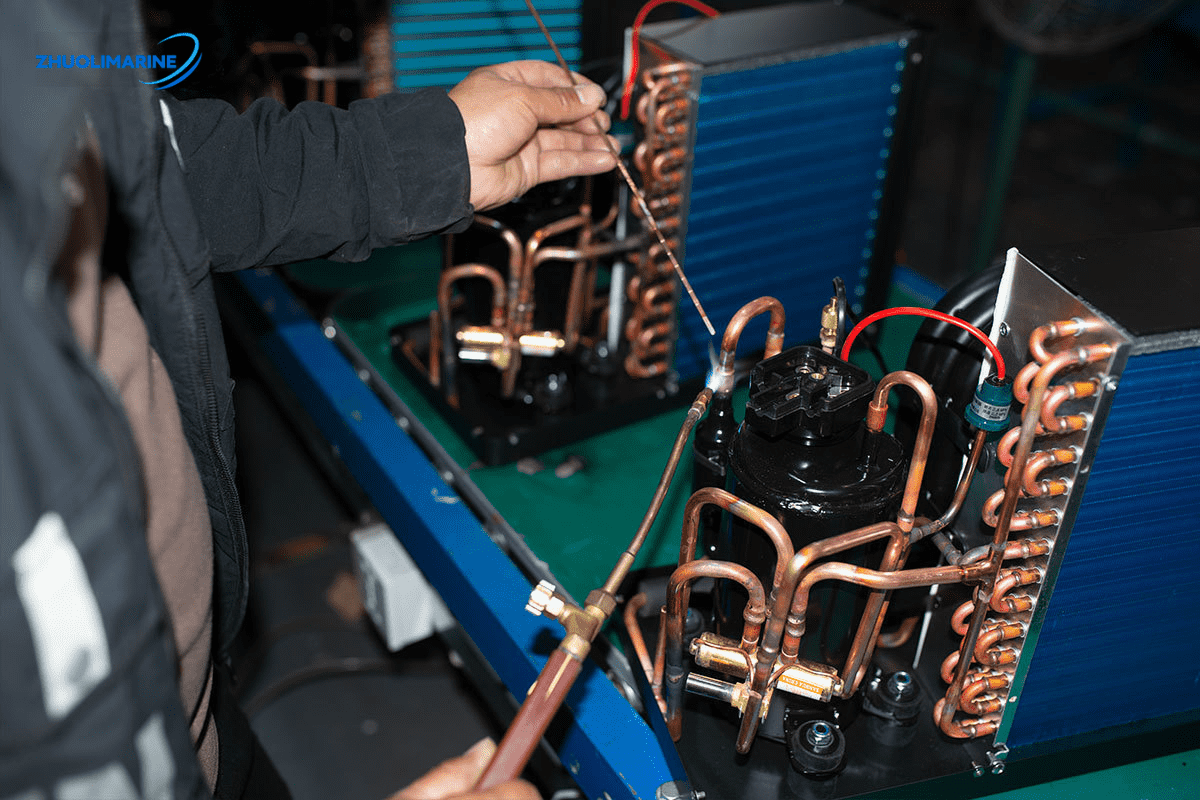
As peak boating and charter seasons approach across Europe, North America, and the Middle East, vessel operators and marine engineers should prepare climate control systems for heavier workloads. Unlike terrestrial HVAC equipment, marine air conditioners operate under constant exposure to humidity, saltwater, vibration, and high temperatures.
A pre-season inspection can identify mechanical wear, fluid restrictions, and other issues before they cause performance loss or unexpected failure. Early maintenance helps maintain reliable cooling, protect onboard electronics, and reduce the risk of costly repairs during busy operating periods.
Essential Steps for Pre-Season Marine Air Conditioner Service
A thorough pre-season inspection begins at the raw water cooling circuit, which serves as the primary heat sink for self-contained marine air conditioning equipment. Because seawater circulates continuously through the heat exchanger to dissipate thermal energy, any restriction in seawater flow immediately compromises cooling capacity and causes high-pressure safety shutdowns.
Inspecting the raw water intake seacock, cleaning the marine strainer basket of accumulated algae, barnacles, and debris, and examining flexible reinforced hoses for signs of delamination or collapse are essential first steps. Technicians must also inspect the centrifugal seawater pump impeller for wear and verify that water discharge streams remain strong and unimpeded during initial system startup.
Beyond fluid circulation checks, performing routine marine air conditioner service requires a detailed evaluation of the refrigeration circuit and air delivery pathways. Clean evaporator coils and dust-free return air filters are critical for maintaining designated airflow velocity across heat exchange surfaces.
Restricted airflow reduces heat transfer efficiency, increases evaporator coil frosting risks, and causes unnecessary mechanical strain on the fan motor. Technicians should inspect evaporator fins for dirt build-up, clean washable return air filters thoroughly, and inspect condensate drain pans to ensure discharge lines remain clear of standing water and bio-fouling blockage. Proper condensate management also prevents mildew formation in interior cabinetry.
Electrical Diagnostics and System Pressure Verification
Electrical diagnostic procedures form another critical pillar of pre-season maintenance. Maritime electrical networks undergo continuous thermal cycling and physical vibration during navigation, which can loosen terminal connections and degrade wiring insulation over time.
Service personnel should inspect control board wiring harnesses, measure operating voltage levels under load, and verify that relay switches operate smoothly. Examining start capacitors, compressor contactors, and grounding bonds helps prevent unexpected electrical faults while anchored or under way.
Verifying electrical integrity prevents voltage drops that could otherwise trigger protective system shutdowns or damage sensitive onboard electronic equipment. Regular voltage and current testing also identifies worn components before they cause full system outages during heavy operational periods.
Refrigerant charge verification and pressure testing must also be conducted before subjecting the climate unit to continuous summer operation. Low refrigerant levels can indicate leakage in copper tubing joints, service valves, or other parts of the refrigeration circuit, leading to diminished cooling capacity, elevated compressor operating temperatures, and potential motor burnout.
Pressure gauges should be connected to assess suction and discharge pressures against manufacturer operating specifications. Identifying and repairing minor refrigerant leaks prior to peak season can help reduce the risk of unexpected repairs and ensures the unit operates efficiently throughout extended voyages.
Overcoming Operational Strain with Advanced Marine Inverter Systems
Selecting durable HVAC hardware and adhering to strict maintenance schedules directly impacts total cost of ownership for commercial fleets and private yacht owners. Conventional fixed-speed marine air conditioners rely on direct-on-line compressor starts that draw massive inrush current spikes—frequently reaching three to four times the nominal operating amperage.
These heavy electrical surges place significant stress on marine generators, battery inverter banks, and circuit protection devices. Furthermore, traditional cupronickel heat exchangers remain vulnerable to aggressive marine bio-fouling, pitting corrosion, and premature erosion, particularly when vessels operate frequently in warm, high-salinity coastal waters.
Modern maritime engineering addresses these operational vulnerabilities through advanced variable-frequency inverter technology and corrosion-resistant material selection. Inverter-driven compressors gradually ramp up speed upon activation, reducing harsh inrush starting spikes and allowing seamless power integration across diverse onboard power architectures, including shore power, diesel generators, lithium battery banks, and solar installations.
When combined with marine-grade structural alloys, inverter systems support stable operation, precise temperature regulation, and reduced fuel consumption over long-distance cruising itineraries. Their ability to maintain precise thermostat settings without frequent power cycles significantly enhances interior acoustic comfort and can help reduce unnecessary system stress over time.
Featured Solution: Integrated Inverter Marine Air Conditioners
For boat builders, marine equipment distributors, and commercial outfitters, integrated inverter marine air conditioners offer compact and efficient climate control for small-to-medium-sized vessels and yachts. Available in 9,000–25,000 BTU capacities with AC 110V/220V and DC 12V/24V/48V configurations, these units use variable-frequency inverter technology to adjust compressor output according to cooling demand. A titanium alloy coaxial tube condenser helps resist saltwater corrosion, while the 304 stainless steel chassis supports long-term marine use. Wi-Fi app control enables remote monitoring, and the compact design fits tight installation spaces.
ZhuoliMarine provides inverter HVAC solutions for commercial vessels, private yachts, and distributors, with AC and DC configurations for different onboard requirements. Contact the technical sales team for product specifications and application support.

