

Reliable adhesive bonding depends on more than whether a machine deposits material at the programmed location. A validated process must demonstrate that each shot meets defined requirements for volume, placement, repeatability, and bond performance under realistic production conditions.
Industrial dispensing systems can support consistent application, but meaningful validation requires measurable acceptance criteria, controlled trials, and documented evidence. Axxonauto develops automated dispensing equipment for industrial applications where process stability and repeatable material delivery are important.
How to Define Acceptance Criteria Before Running Trials?
Validation begins with a clear definition of what constitutes an acceptable deposit. Depending on the application, critical characteristics may include bead width, dot diameter, deposited mass, positional tolerance, coverage, and final bond strength. Each requirement should connect to a functional need rather than an arbitrary numerical target.
Measurement methods must also be appropriate to the feature being evaluated. A precision balance can assess deposited mass, while calibrated cameras or microscopes can measure bead geometry and placement. Destructive testing may be necessary to evaluate bond strength, although the test method should reflect the joint’s actual service requirements.
Acceptance limits should account for normal process variation without allowing defects that affect product performance. Engineering teams can establish initial limits through product specifications, material guidance, and controlled experiments. Documenting the measurement method, sample size, and decision rules makes the results easier to reproduce across shifts and production batches.
| Acceptance criterion | Measurement method | Functional link |
| Deposit volume | Precision balance or calibrated imaging | Bond strength and coverage |
| Placement accuracy | Vision or dimensional inspection | Component clearance |
| Repeatability | Multiple cycles across runs | Production consistency |
How to Test Material Behavior Under Real Production Conditions?
Adhesive properties can change with temperature, storage history, mixing conditions, and elapsed time after preparation. These variables influence flow resistance, wetting, and curing behavior, so validation should use material prepared according to the intended production procedure. Testing only freshly prepared adhesive may overlook problems that appear later in a production run.
An adhesive dispensing evaluation should cover the relevant operating conditions: normal cycle speed, planned idle periods, and expected variation in material temperature. Record the adhesive batch, preparation time, ambient conditions, and equipment settings for each trial. Such records help explain why two apparently identical runs may produce different results.
Substrate characteristics deserve equal attention. Surface contamination, coatings, roughness, and component geometry can affect wetting and adhesion even when the deposited volume remains consistent. Representative production parts provide more useful evidence than idealized test surfaces, particularly when the finished joint depends on precise material placement or coverage.
How to Challenge Motion Accuracy and Dispense Repeatability?
Automated motion introduces variables that static dispensing tests cannot fully capture. Acceleration, travel speed, direction changes, nozzle height, and path geometry may influence where material lands and how it spreads. Validation should include difficult path segments, not just simple dots or straight beads that are easy to reproduce.
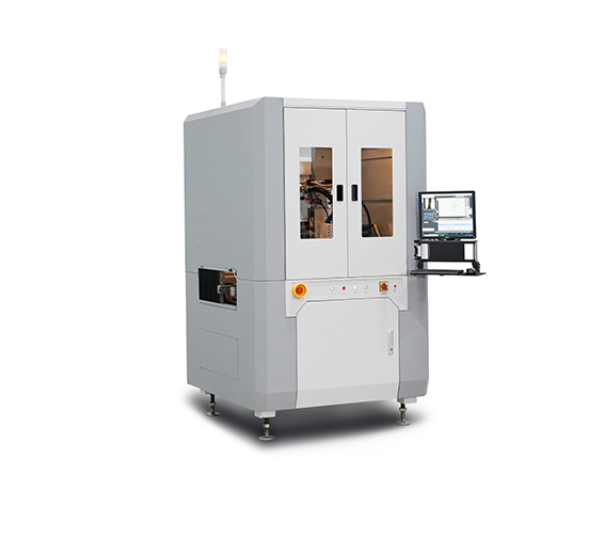
The MYC50E is an industrial THT dispensing machine with a stated X-Y peak velocity of 800 mm/s. This motion capability is relevant when assessing cycle-time requirements alongside deposition accuracy, since faster travel can affect the relationship between machine movement and material delivery. Actual production performance should be measured using the intended path, adhesive, and component configuration rather than inferred from peak velocity alone.
Repeatability testing should include multiple shots across an appropriate number of cycles and, where practical, different production runs. Evaluate both average performance and variation: a process can produce an acceptable average while still generating occasional out-of-tolerance deposits. Trend charts and statistical process measures can reveal drift, inconsistent output, or sensitivity to particular operating conditions.
How to Document Results and Establish Ongoing Process Control?
A successful validation study should leave behind a usable process record, not merely a collection of test results. The record typically includes equipment configuration, approved parameters, material specifications, inspection methods, acceptance limits, deviations, corrective actions, and final approval. Clear documentation helps operators reproduce the validated conditions and supports future troubleshooting.
After approval, routine monitoring should focus on characteristics that are both measurable and relevant to product quality. Depending on the application, checks may include shot weight, bead dimensions, dispense pressure, material temperature, and visual inspection. The frequency of these checks should reflect process risk, observed variation, and the consequences of a dispensing defect.
Changes to adhesive formulation, nozzle geometry, software settings, motion profiles, or material supply arrangements may affect the validated process. A change-control procedure should identify which modifications require partial or full revalidation. This prevents unverified adjustments from gradually shifting production away from the conditions demonstrated to be acceptable.
Conclusion
A dependable validation process combines measurable output criteria with trials that reflect actual manufacturing conditions. Material behavior, motion performance, deposit consistency, and final joint quality each provide a different piece of evidence; together, they show whether the process is suitable for routine production.
Axxonauto offers automated dispensing technology for industrial workflows, while validation results must ultimately demonstrate that the selected configuration meets the application’s documented requirements.
FAQs
How Many Samples Are Needed to Validate An Adhesive Dispensing Process?
The required sample size depends on process risk, expected variation, acceptance limits, and the statistical confidence needed. A documented sampling rationale is preferable to selecting a sample count without considering these factors.
Which Parameters Should Be Recorded During Validation?
Typical records include adhesive batch and preparation time, temperature, pressure, shot duration, nozzle configuration, motion settings, deposit measurements, and relevant bond-test results. The exact list should reflect the process’s critical characteristics.
Should Validation Include Maximum Machine Speed?
Testing at the intended production speed is essential, and testing near the operating limits may be appropriate when those conditions are part of the approved process. Peak motion speed alone does not establish dispensing accuracy or bond quality.
How Can Axxonauto Equipment Fit Into Process Validation?
Equipment capabilities can inform trial planning, including motion range, dispensing control, and application requirements. The selected configuration still needs to be tested with the actual adhesive, substrate, production settings, and defined acceptance criteria.

