

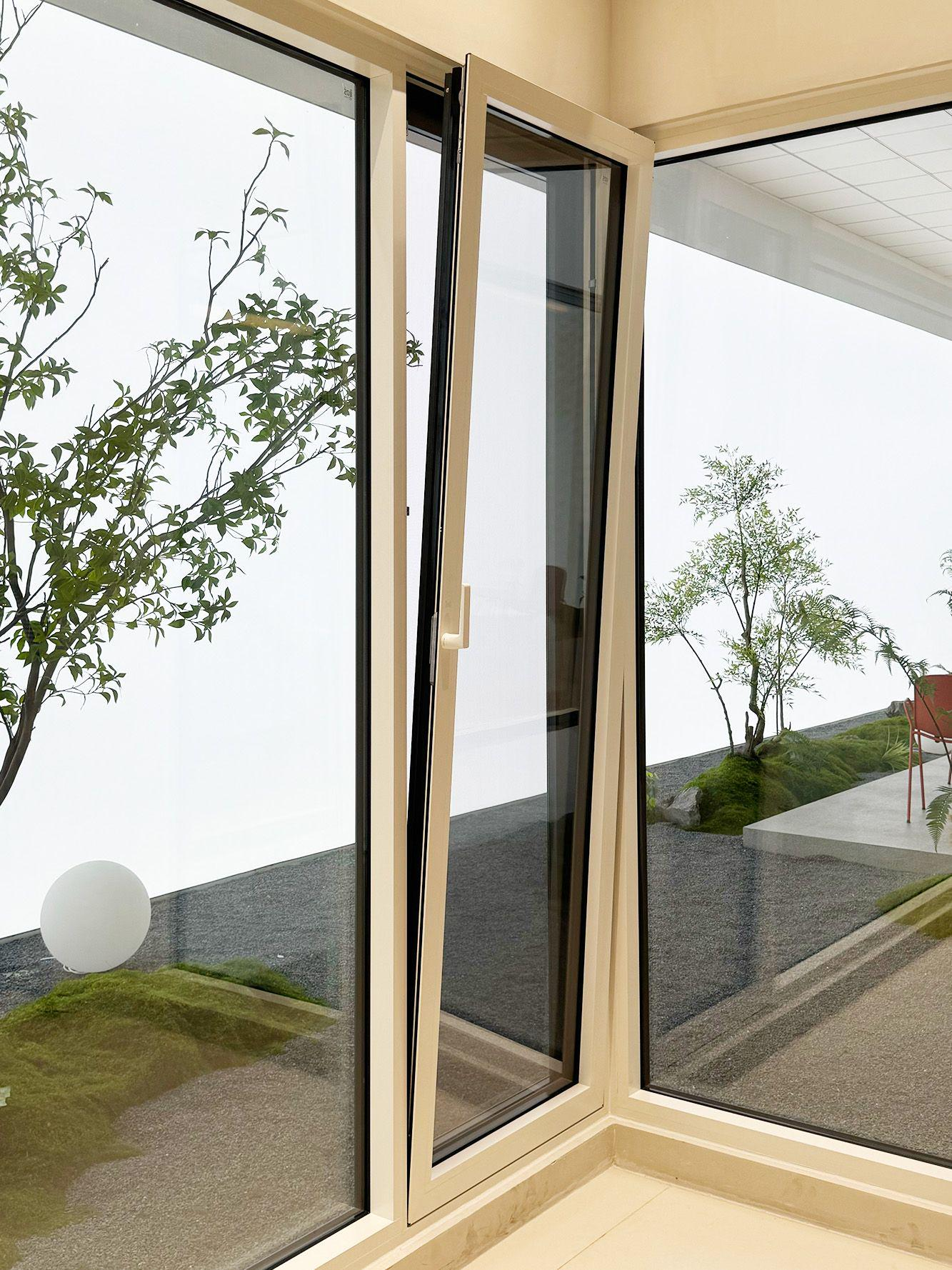
The tilt and turn window presents a sophisticated engineering challenge in modern fenestration. A single sash executes two distinct movements: tilting inward for ventilation and swinging horizontally for full access. Achieving these functions requires an intricate system of interconnected components rather than standard pivots and latches.
The internal mechanics rely on a perimeter espagnolette linkage that translates singular rotational inputs into multiple mechanical actions. Understanding the handle, hinge, and locking mechanism provides valuable insight into how premium tilt and turn window hardware solution operates.
CMECH develops integrated systems that manage these kinematic requirements seamlessly. By examining their specialized components, architects and fabricators can better evaluate the substantial structural demands placed on dual-mode fenestration in high-end projects.
The Handle as the Command Center for CMECH Hardware
The handle serves as the primary interface and command center for the entire operation. Its physical position dictates the active mode by manipulating the internal gearing. Pointing the lever downward secures the heavy sash in a locked, weather-tight state.
Rotating the handle 90 degrees from the closed position engages the side hinges for the turn function, allowing the sash to swing inward like a traditional door. Rotating it 180 degrees (with the sash fully closed) activates the tilt function, providing a ventilation gap that offers rain protection under normal weather conditions.
CMECH offers the premium Milan and Venice Series handles to complement modern interiors. Recognized with Red Dot and iF Design Awards, these components feature precision-engineered mechanics. They deliver a smooth, stable operating experience while maintaining a refined aesthetic across varying architectural styles.
The Drive Gearbox and Internal Transmission Dynamics
Beneath the handle, the drive gearbox acts as the critical transmission unit for the tilt and turn window. It converts the rotational motion of the user’s hand into the linear movement required by the perimeter espagnolette. The quality of this gearbox directly influences the long-term operational feel.
CMECH utilizes a patented dual-gear technology within their gearboxes. The paired gears mesh precisely to reduce mechanical backlash, ensuring the handle inputs translate smoothly to the lock points. A smart anti-drift design keeps internal components aligned, significantly extending the reliable service life of the transmission unit.
A premium stainless steel faceplate reinforces the gearbox against daily wear and deformation. Damping structures are smartly integrated into the drive system to soften mechanical noise. This provides a reassuringly quiet operation suitable for high-end residential and luxury hospitality environments prioritizing acoustic comfort.
The Espagnolette and Multi-Point Locking Integration
The espagnolette system is a continuous linkage running along the perimeter of the window sash. It connects the central gearbox to multiple locking points distributed around the frame. This multi-point approach enhances physical security and ensures consistent gasket compression when the sash is firmly closed.
Robust 304 stainless steel roller lock points provide strong anti-pry resistance against forced entry. As the transmission rod moves, these durable rollers engage cleanly with their corresponding keeps. This distributed locking force creates a tight seal against drafts, moisture, and noise, contributing to overall building energy efficiency.
The corner drive is a vital component of this perimeter system, seamlessly redirecting linear motion around the 90‑degree frame corners. As an optional upgrade, a fail‑safe corner drive adds a crucial mechanical interlock. This smart addition protects the mechanism by preventing the simultaneous engagement of both the tilt and turn modes under normal operating conditions.
The Crucial Role of the Tilt Bolt and Striker
When the tilt and turn window hardware solution is set to ventilation mode, the side lock points intentionally disengage. At this stage, the tilt bolt and corresponding striker become the primary securing components. The tilt bolt at the top of the sash locks into the frame striker, limiting inward travel distance.
This controlled tilt opening allows steady airflow while actively preventing unpredictable rain infiltration. It provides a secure ventilation option that mitigates fall risks for building occupants. The length of the tilt bolt arm dictates the exact ventilation gap, requiring precise manufacturing tolerances to function smoothly without binding.
Load-Bearing Dynamics of the Concealed Hinge
The specialized hinges bear the substantial static and dynamic weight of the sash, particularly during the full inward swing of the turn mode. Heavy modern glazing configurations demand exceptionally robust support structures. Concealed hinge designs offer the added benefit of uninterrupted sightlines by hiding the knuckles within the frame rebate.
The CMECH concealed-hinge configuration is meticulously engineered to handle substantial structural loads. Fabricated with thickened 304 stainless-steel support arms, this concealed-hinge system manages demanding sash weights up to 100 kg. This capacity allows fabricators to specify large-format glass panels securely.
Adjustability and Dimensional Specifications for Modern Facades
Proper structural alignment is critical for dual-function sashes, as minor deviations can severely impact both the weather seal and the locking engagement. High-performance tilt and turn window hardware solution incorporates fully adjustable sealing geometry. This allows professional installers to fine-tune the sash position along multiple axes after the initial installation.
The CMECH hardware solutions for concealed‑hinge tilt‑and‑turn windows support highly versatile dimensional ranges for modern facades. They smoothly accommodate sash widths spanning from 490 mm to 1200 mm, alongside heights ranging from 600 mm to 2800 mm for its 130 kg load‑rated configuration. This extensive hardware range provides architects with the flexibility to design expansive, reliable fenestration confidently.
Ensuring Longevity Through Integrated Hardware Systems
Specifying reliable tilt and turn window hardware solution requires a thorough understanding of how the handle, transmission, locks, and hinges interact mechanically. An integrated system significantly reduces internal friction, enhances facade security, and securely supports substantial glazing weights.
Engineering precision across these hidden components ultimately defines the long-term functionality of the fenestration assembly. Selecting validated, high-quality hardware solution ensures that dual-mode windows deliver consistent, safe, and sophisticated operation for decades, effectively meeting the stringent demands of contemporary architectural design.
All hardware specifications, performance data and material parameters are sourced from CMECH official product manuals and certified test reports.

