

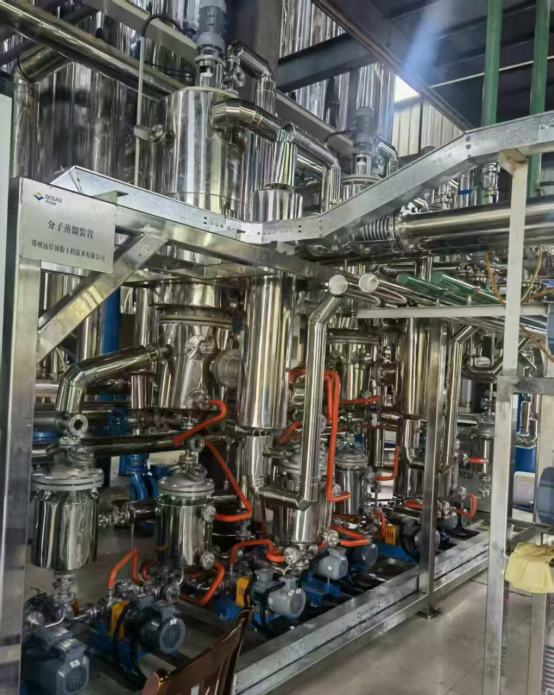
In the functional oils sector, algae-derived DHA holds a unique and significant position. As the original source of docosahexaenoic acid (DHA), algae oil avoids the risk of marine pollutant accumulation associated with fish oil, and its triglyceride molecular structure is more readily absorbed by the human body. However, behind these advantages lie extremely challenging refining problems.
Unlike bulk vegetable oils such as soybean or palm oil, algae DHA oil originates from microbial fermentation. Its chemical composition and impurity profile are far more complex than conventional oils. More critically, the DHA molecule contains six unsaturated double bonds, making it highly sensitive to heat, oxygen, and light. Effectively removing fishy odors, improving color, and controlling peroxide values during refining, while simultaneously avoiding DHA isomerization or oxidative degradation, represents the central engineering challenge in algae oil refining.
The Unique Difficulties of Algae DHA Refining
Sources of Fishy Odor and Their Removal: The fishy odor in algae DHA oil stems primarily from two sources: volatile compounds produced during microbial fermentation, such as aldehydes and ketones (e.g., hexanal, nonanal), and secondary oxidation products generated during refining and storage, which also produce fishy notes. These odor compounds have varying boiling points, and some are tightly bound to the oil, making them difficult to remove completely through conventional deodorization alone.
Color Issues: Crude fermented algae oil typically exhibits a deep yellow to reddish-brown color, primarily due to pigments from the microalgae itself (such as carotenoids) and Maillard reaction products formed during fermentation. The bleaching process must remove these pigments while avoiding excessive adsorption of active components like DHA.
Oxidative Stability and Peroxide Value Control: The highly unsaturated nature of algae DHA oil exposes it to oxidation risk at every stage of refining. Peroxide value (POV) and anisidine value (AnV) are key indicators of primary and secondary oxidation levels. One of the primary goals of refining process design is to control the peroxide value of the final product below 1 meq/kg and the anisidine value below 1.0, ensuring sensory quality and shelf life.
Core Technology: The Synergy of Molecular Distillation and Low-Temperature Deodorization
Molecular distillation (short-path distillation) is a key technology in algae DHA refining. Conventional alkali refining deacidification (e.g., 80°C, 10% alkali solution, 50 minutes) can achieve deacidification rates of up to 98%, but the high temperatures and alkaline conditions may exacerbate DHA oxidation. Molecular distillation, operating under high vacuum (typically 0.2–0.4 Pa), separates components based on differences in mean free path at temperatures far below conventional distillation. This allows free fatty acids and some volatile odor compounds to be effectively removed while heat-sensitive DHA triglycerides are preserved.
Low-temperature deodorization is another critical step in addressing fishy odor issues. Studies indicate that, compared to conventional deodorization at high temperatures (often exceeding 200°C), deodorization at 140–160°C under vacuum conditions <1000 Pa, combined with stripping steam at 80–120°C, can effectively remove odor molecules while significantly retaining carotenoids and other natural antioxidants in the algae oil. Patent research further notes that maintaining carotenoid content above 1.5 mg/kg in DHA algae oil provides intrinsic antioxidant capacity that can help suppress DHA oxidation and off-odor generation during subsequent applications, such as high-temperature cooking.
Process Integration: The Role of Adsorption and Winterization
Prior to molecular distillation and deodorization, degumming, bleaching, and winterization are typically required. Degumming removes phospholipids and other gums, creating favorable conditions for downstream processes. Bleaching typically uses adsorbents such as bleaching earth, activated carbon, or silica at dosages of 2–3%, reducing pigments while adsorbing some polar impurities. Winterization removes high-melting-point saturated fatty acids through low-temperature crystallization, improving the clarity of the algae oil at low temperatures.
Quantitative Quality Standards
Based on industry research and patent literature, the key quality indicators for high-purity refined DHA algae oil can be summarized as follows:
- DHA Content: 40%–65% — The core value of the product.
- Peroxide Value (POV): < 1 meq/kg — Controls primary oxidation and prevents fishy off-odors.
- Anisidine Value (AnV): < 2.5 (preferably <1.0) — Controls secondary oxidation products and ensures flavor stability.
- Carotenoid Content: > 1.5 mg/kg — Provides natural antioxidant capacity to help suppress odor formation.
Conclusion
Algae DHA refining is an engineering system requiring precise balance. The core challenge lies in removing fishy odors, pigments, and free fatty acids while maximizing the preservation of DHA’s natural conformation and activity. Molecular distillation provides a gentle separation pathway, while low-temperature deodorization (140–160°C) effectively avoids the risk of heat-induced isomerization. Through precise control and integration of degumming, bleaching, deodorization, and molecular distillation, high-quality DHA algae oil with high purity, low fishy odor, and low peroxide value can be achieved, meeting the stringent requirements of premium markets such as infant formula and functional foods.
Ocean has extensive process design and engineering experience in the refining of functional and specialty oils. For more information on microbial oil (algae oil) refining production lines, please refer to our oil refining solutions.

