

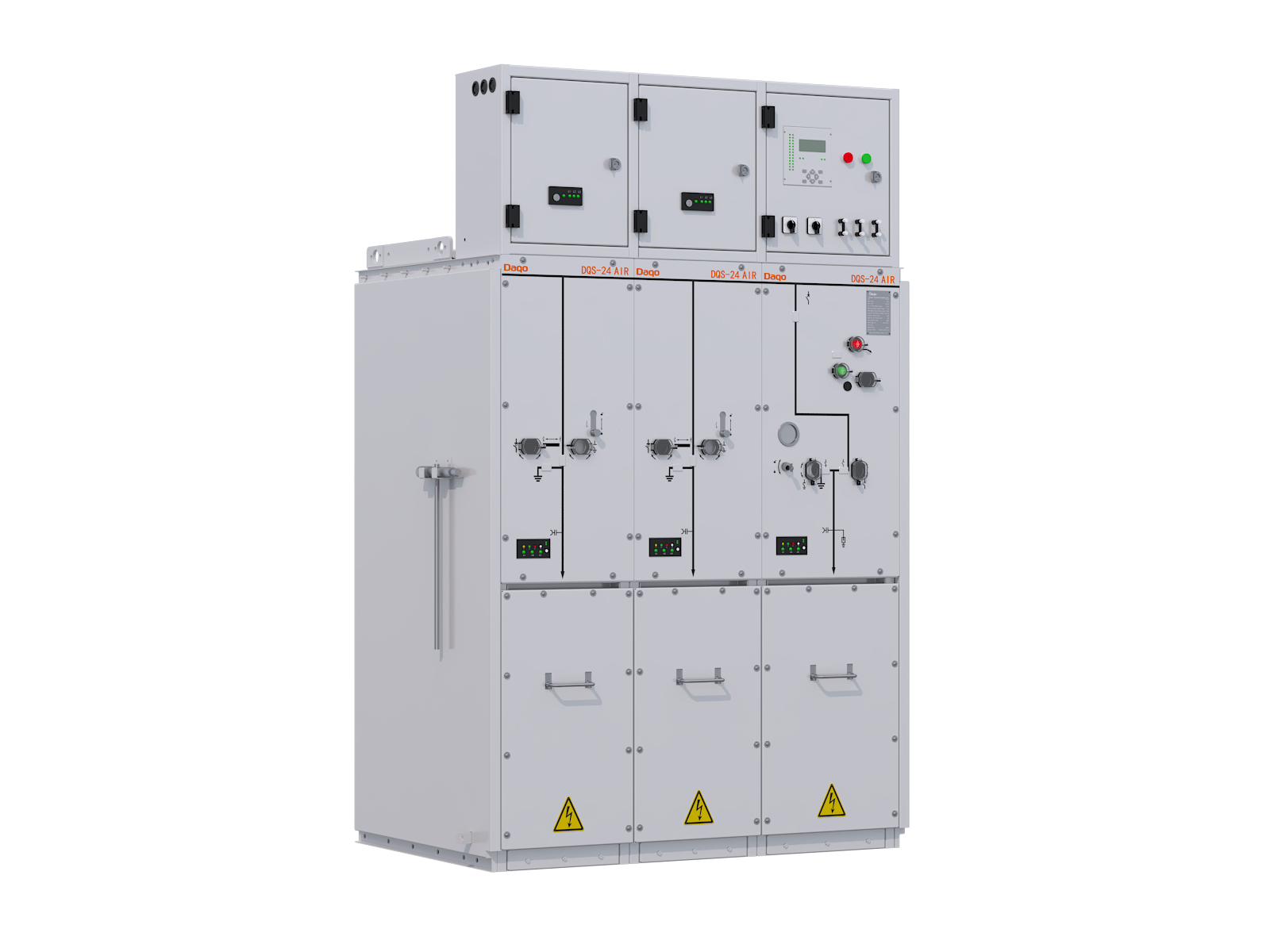
Renewable energy projects are changing how electricity is generated, distributed, and managed. Solar farms, wind installations, battery energy storage systems, and industrial microgrids introduce new operating conditions for distribution networks. To accommodate these changes, utilities and project developers need switchgear that matches their electrical requirements, installation environments, and future expansion plans. Custom medium-voltage switchgear can help address these needs when its configuration is based on a detailed assessment of system conditions and project objectives.
Why Renewable Energy Projects Require Flexible Distribution Equipment
Unlike conventional power plants, renewable energy installations often connect to distribution networks at multiple locations and operate with variable generation. Solar output changes with sunlight, while wind generation depends on weather conditions. Battery storage adds further operating flexibility, allowing electricity to be stored and released according to system demand.
These characteristics influence protection coordination, switching arrangements, fault management, and power flow. Equipment selection must therefore consider more than rated voltage alone. Engineers need to assess load profiles, short-circuit levels, feeder configurations, environmental conditions, and the connection requirements specified by the relevant utility.
How Custom Medium-Voltage Switchgear Supports Grid Integration
Medium-voltage switchgear connects, controls, isolates, and protects electrical circuits within distribution systems. In renewable energy applications, its configuration should reflect the project’s topology and operating strategy rather than follow a generic equipment specification.
For example, a solar farm may require dedicated feeder protection, transformer connections, and provisions for future capacity increases. A wind project may need switching arrangements distributed across several collection points. Battery energy storage installations also require coordinated interfaces with transformers, inverters, and the wider distribution network.
A project-specific design can align these functions with the electrical single-line diagram, protection philosophy, and installation constraints. Engineers should confirm protection settings, interlocking arrangements, rated breaking capacity, and applicable standards before equipment is approved.
Selecting SF₆-Free Technology for Sustainable Infrastructure
Environmental performance has become an important consideration in medium-voltage equipment procurement. Sulfur hexafluoride (SF₆) has traditionally been used as an insulating and arc-quenching gas in electrical equipment, but its very high global warming potential has encouraged the development and adoption of alternatives.
SF₆-free switchgear can reduce reliance on this greenhouse gas. However, buyers should distinguish between the insulating medium and the arc-extinguishing technology, as these are separate functions. They should also evaluate electrical performance, enclosure design, service requirements, safety provisions, and end-of-life handling.
Daqo Group’s DQS-24 AIR Eco-Friendly Gas Insulated Ring Main Unit is one example of this approach. The unit uses clean-air insulation and vacuum arc extinguishing, providing an alternative to SF₆-insulated equipment. Its compact construction and maintenance-free design are intended to support power distribution network construction and upgrades.
Evaluating Daqo Group’s DQS-24 AIR Ring Main Unit
The DQS-24 AIR is designed for medium-voltage distribution applications where space efficiency, operational reliability, and environmental considerations matter. Its sealed high-voltage components help limit exposure to external environmental influences, while vacuum interrupters provide arc extinguishing during switching operations.
The rated voltage of 24 kV and a rated continuous current of 630 A for both the circuit-breaker and load-break-switch units. Both configurations list a rated short-time withstand current of 21 kA for three seconds and a rated peak withstand current of 54.6 kA. These values should be checked against the project’s calculated fault levels and operating requirements.
The product information also identifies a gas-compartment protection rating of IP67 and enclosure protection classes of IP54/IP4X, depending on the configuration. Modular expansion options can accommodate different installation layouts, while monitoring and automation features can support remote operation and substation management. Final suitability depends on the selected arrangement, project specifications, and applicable certification requirements.
Key Factors When Specifying Equipment for Renewable Projects
A reliable procurement process begins with a clear technical specification. Project teams should define rated voltage, continuous current, short-circuit withstand capability, switching duties, insulation requirements, and internal-arc classification where applicable. These parameters must match the network design rather than be selected solely on the basis of product availability.
Installation conditions also influence equipment selection. Outdoor renewable energy sites may experience dust, humidity, temperature variations, and limited maintenance access. Buyers should verify enclosure protection, operating limits, installation clearances, and any requirements for pressure relief or environmental protection.
For custom medium-voltage switchgear, modularity and future expansion deserve particular attention. Additional feeders, storage capacity, or distributed generation may change the original network configuration. Planning for these possibilities can reduce the complexity of later upgrades, although expansion capability must be confirmed for the specific product arrangement.
Monitoring and automation are equally important. Where supported, temperature, current, voltage, and equipment-condition monitoring can help operators identify abnormal conditions and improve maintenance planning. Integration with supervisory control systems should be assessed during engineering, including communications compatibility, cybersecurity requirements, and the intended level of remote control.
Building a Practical Procurement and Integration Strategy
Developers, engineering contractors, and utilities should involve switchgear suppliers early in project design. Sharing the single-line diagram, load calculations, fault studies, site conditions, and future expansion plans helps suppliers recommend suitable configurations. Factory inspection, type-test documentation, routine test records, and commissioning procedures should also form part of the acceptance process.
A supplier’s ability to provide technical documentation and clarify configuration limits is as important as the equipment’s headline specifications. Buyers should compare lifecycle maintenance needs, installation costs, spare-parts availability, and end-of-life arrangements alongside initial purchase price.
Advancing Renewable Energy with Better-Matched Equipment
Renewable energy integration depends on coordinated planning across generation, protection, distribution, and control systems. Selecting appropriately rated equipment helps projects address changing power flows while maintaining safe and reliable operation. Daqo Group‘s DQS-24 AIR offers an SF₆-free, clean-air-insulated option for suitable 24 kV distribution applications. By aligning project requirements with verified technical capabilities, decision-makers can make more informed equipment choices and prepare electrical infrastructure for future development.

