

Industrial facilities consume electricity in very different ways. A manufacturing plant can experience short production peaks, while a refrigerated warehouse requires continuous power. A solar-equipped logistics center faces another challenge when generation exceeds demand during daylight hours.
The value of commercial and industrial energy storage depends on these operating differences. Battery storage delivers the greatest benefit when its electrical characteristics match a measurable problem, such as peak demand, limited grid capacity, or unused renewable generation.
Which Industrial Load Patterns Favor Battery Storage?
Before investing in storage, engineers need to understand how electricity consumption changes throughout the day. Monthly billing totals provide useful financial information, but they rarely reveal the duration and frequency of individual demand peaks.
Manufacturing Facilities With Short Peaks
Factories often experience demand spikes when large motors, compressors, heating equipment, or several production lines operate simultaneously.
Under tariffs containing demand charges, reducing these peaks can lower electricity expenses. A battery supplies part of the required power, reducing the amount imported from the grid.
The required inverter power depends on the size of the peak. Battery energy capacity determines how long the reduction can continue.
A factory experiencing several peaks in one shift requires sufficient recharge time or additional stored energy. Otherwise, the battery can reach its operating limit before the last peak occurs.
Buildings With Continuous Electricity Demand
Refrigerated warehouses and continuous-process facilities typically have more stable load patterns. For these installations, energy shifting can be more relevant than short-duration peak reduction.
A battery charges during lower-cost electricity periods and discharges when prices increase. The financial advantage depends on the tariff difference, conversion losses, and operating costs.
Engineers examine seasonal patterns and production schedules. Electricity consumption during weekends or maintenance shutdowns can differ significantly from ordinary working days.
Commercial and industrial energy storage therefore are sized using representative operating records rather than one unusually demanding day.
Where Do Industrial Grid Energy Solutions Add Value?
Industrial sites with distributed generation or complex electrical infrastructure introduce further opportunities. However, the financial value depends on how electricity flows between generation equipment, storage, loads, and the utility connection.
Solar-Equipped Commercial Facilities
A factory or warehouse with photovoltaic panels can generate surplus electricity during periods of strong sunlight. Battery storage retains part of that electricity for later consumption, reducing grid imports when solar output declines.
This approach is particularly relevant when electricity export is restricted or compensation for exported energy is low.
The most useful technical assessment compares:
- Hourly photovoltaic generation with electricity consumption.
- Available surplus energy during charging periods.
- Evening or nighttime demand suitable for battery discharge.
- Electricity prices, storage losses, and operating expenses.
Higher solar self-consumption does not automatically guarantee better financial results. The value of shifted electricity must justify the additional storage investment.
Industrial Parks and Shared Infrastructure
Industrial parks often contain several buildings with different operating schedules. Coordinated energy management can help control aggregate demand when electrical infrastructure and commercial arrangements support shared operation.
However, the relationship between meters and connection points is important. A battery connected behind one electricity meter cannot automatically reduce demand charges associated with another.
Effective industrial grid energy solutions require appropriate metering, dispatch controls, and clearly assigned operating responsibilities. Property owners and facility operators also need to establish how savings, maintenance expenses, and operating risks are allocated.
These considerations determine whether shared storage provides a practical improvement over separate installations.
How Should Facilities Evaluate Project Suitability?
A storage feasibility study connects technical requirements with measurable economic objectives. The strongest opportunities are not necessarily located at facilities consuming the most electricity.
Match Capacity to the Actual Problem
Battery capacity describes stored energy, while power rating determines how quickly electricity can be delivered.
An installation designed to reduce a short industrial peak requires sufficient output power. A facility shifting electricity across several hours needs enough usable energy to sustain the required discharge.
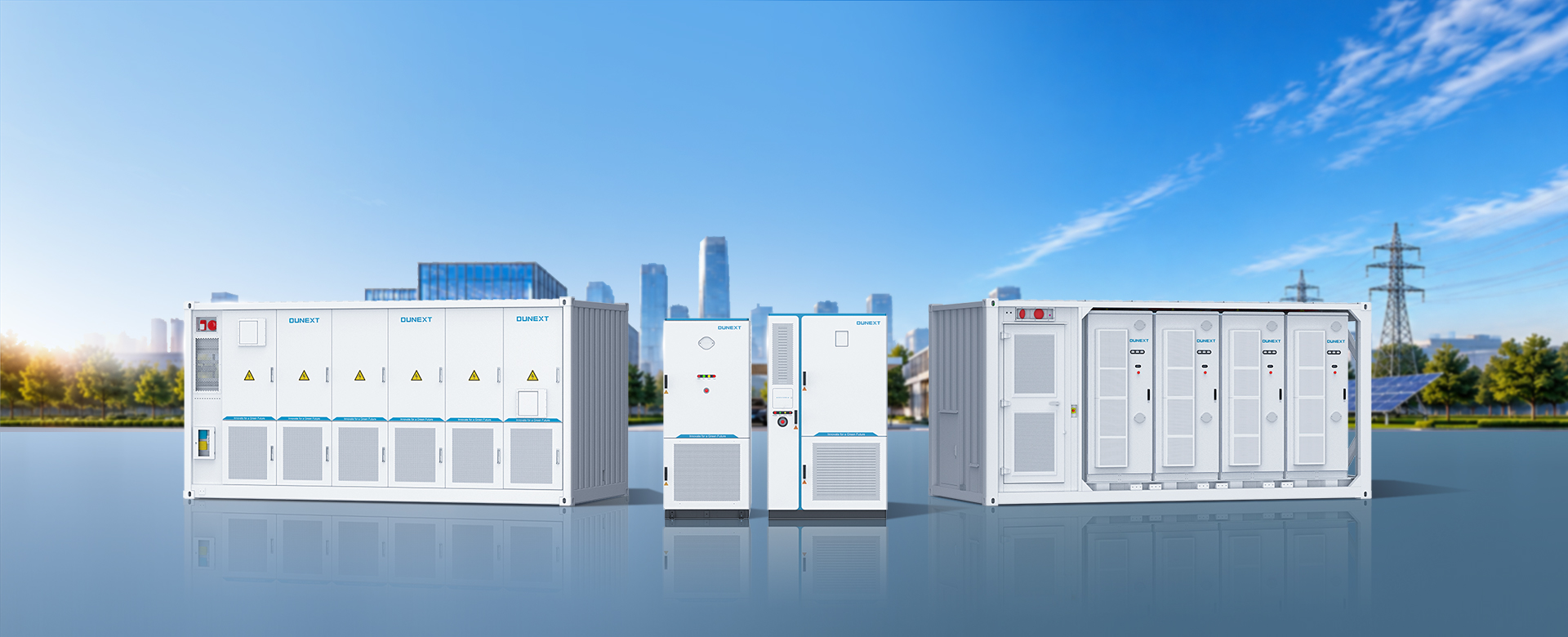
Dunext’s PowerHill 233kWh provides 233kWh battery capacity with 105kW rated charging and discharging power. It is compatible with AC-coupled configurations and supports DC-coupled photovoltaic integration.
These characteristics make it relevant to distributed commercial storage applications, subject to electrical compatibility and appropriate engineering.
Larger facilities can require higher-capacity, containerized systems instead of individual cabinets.
Consider Grid Restrictions and Operational Continuity
The site’s electrical connection can limit charging and export power. Transformer capacity, switchgear ratings, protection requirements, and communication interfaces therefore are evaluated before installation.
Storage can also support power continuity, but uninterrupted backup requires compatible inverter functions, appropriate isolation arrangements, and properly designed protection systems.
Future operating changes are equally important when planning industrial grid energy solutions. Production expansion, additional charging equipment, and increased solar generation can reshape electricity demand and affect storage performance.
Model installation cost,round-trip efficiency,maintenance anddegradation together; a lowcapex system with poorefficiency can cost more overten years.
High-Value Use Cases for Industrial Energy Storage
Industrial storage provides the greatest value where electrical demand creates a clear financial or operational opportunity.
Manufacturing facilities, solar-equipped buildings, refrigerated warehouses, and industrial parks require different operating strategies.
Dunext supplies integrated commercial and industrial energy storage equipment for different deployment scales. Successful projects begin with measured consumption, suitable equipment sizing, and a realistic assessment of site-specific benefits.

